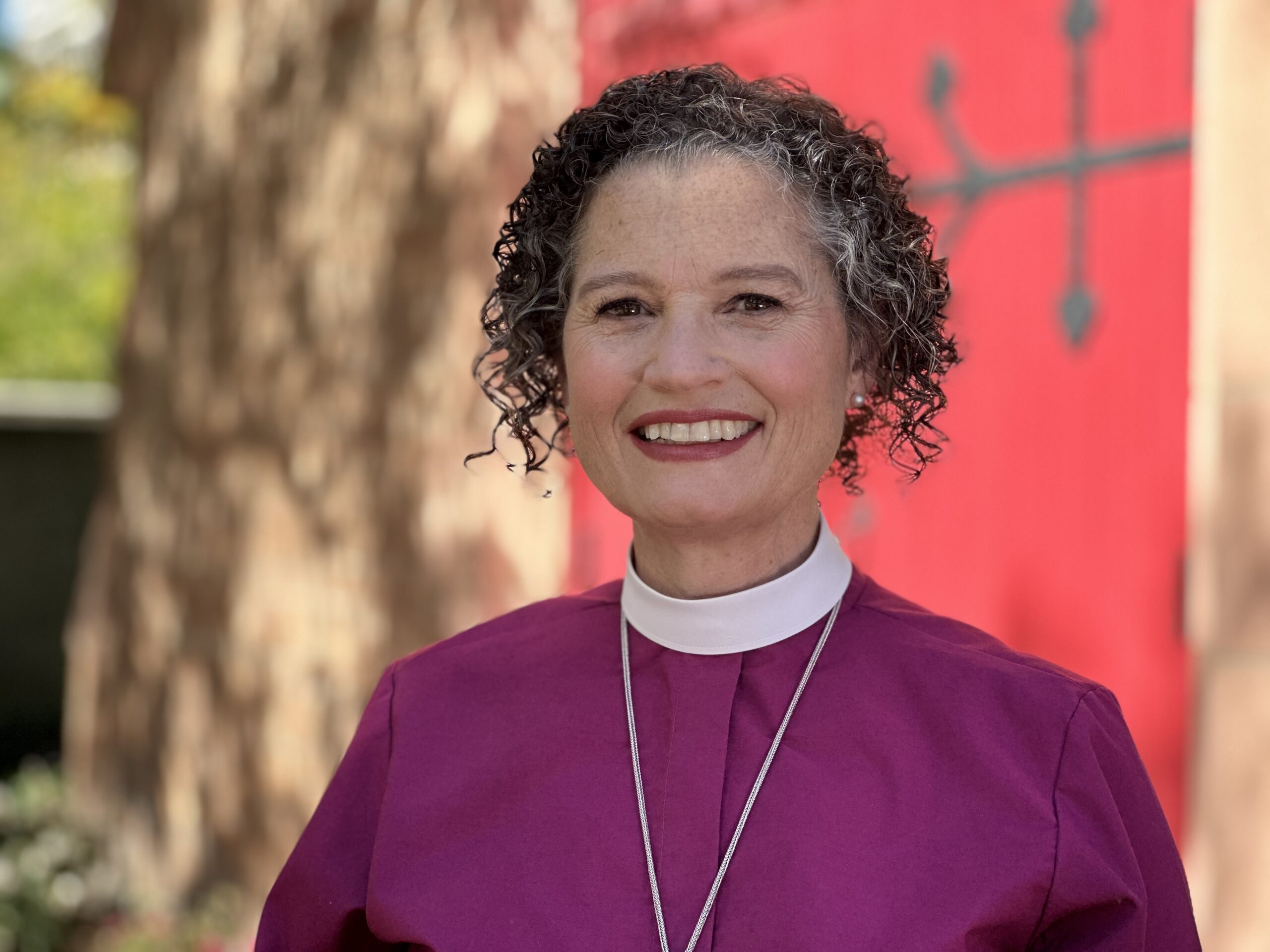
Excerpt from Bp. Spiegel’s Homily for Sept. 24 at the House of Bishops
Scripture reading Luke 4: 14-30
Jesus walks into Nazareth absolutely saturated with grace.
“The Spirit of the Lord is upon me.”
And with those words, the old equilibrium cannot hold.
The idea of change is so unsettling that we put up barriers and create force against it, even when a change of culture, circumstance, or approach is clearly called for. Change is so often heard as a four-letter word with six letters. And Jesus shows us why.
Jesus walks into the synagogue, reads from Isaiah, and announces:
This is happening. Today. “The Spirit of the Lord is upon me.”
Good news to the poor.
Release to the captives.
Recovery of sight.
Freedom for the oppressed.
And initially, they are amazed: What a blessing has fallen upon them!
Until Jesus begins talking about where God’s grace goes. He reminds them of the widow of Zarephath. Naaman the Syrian. People on the other side of the membrane.
And Jesus makes this profoundly unsettling claim: God is already at work out there.
That changes the pressure in the room. The crowd can tolerate:
“God has blessed us.”
They might even tolerate:
“God wants us to bless them.”
What becomes intolerable is:
“God is already out there, and we may need what God is doing out there.”
Jesus is suggesting the membrane has to become permeable in both directions.
We often imagine that we go out into the world carrying God with us.
But what if God has put something on the other side of the change or the difference to the Status Quo that the Church desperately needs?
The widow was outside Israel. Naaman was Syrian. God was already there.
And if we allow what is on the other side of the membrane to change us, something else is also true:
We cannot remain as we were.
There is loss in that.
Some of what we lose needs to go—assumptions, prejudices, ways of exercising power that we had mistaken for faithfulness.
But not everything we grieve was wrong:
- Leaving a congregation we loved because life is calling us somewhere else.
- Ways of worship that formed us.
- Children going off to college and/or moving away.
Change begets grief and often does not make room for the necessary lamentation.
With time though Grace will get through. We hear in the final words of today’s Gospel:
“They got up, drove him out of the town, and led him to the brow of the hill…”
Pressure. Real, embodied resistance to what God is doing.
“But he passed through the midst of them and went on his way.”
Grace gets through. God was already there on the other side of the resistance.
The pressure generated by the Church is not always evidence that grace wasn’t moving. Perhaps the pressure reveals just how consequential the movement is.
Luke asks us an uncomfortable question: As a disciple of Jesus, am I permeable to God?
Changed from Glory into Glory sounds so beautiful in liturgy, but in life all change creates pressure.
Join us for Saturday at Diocesan Convention where our theme is “Uplifted by Grace”. Uplifted through the hard truths of Discipleship. Uplifted through the discomfort of formation as Disciples of Jesus.
Until we gather together as the Episcopal Church in Utah, ponder this question:
Will we remain permeable to the flow of Grace even when it requires us to change?